
How to Set the Right Price for Your Export Product
Price too high and buyers walk away. Price too low and every container loses money. This guide shows you how to build a price that covers every cost, fits the market and still leaves room to negotiate.
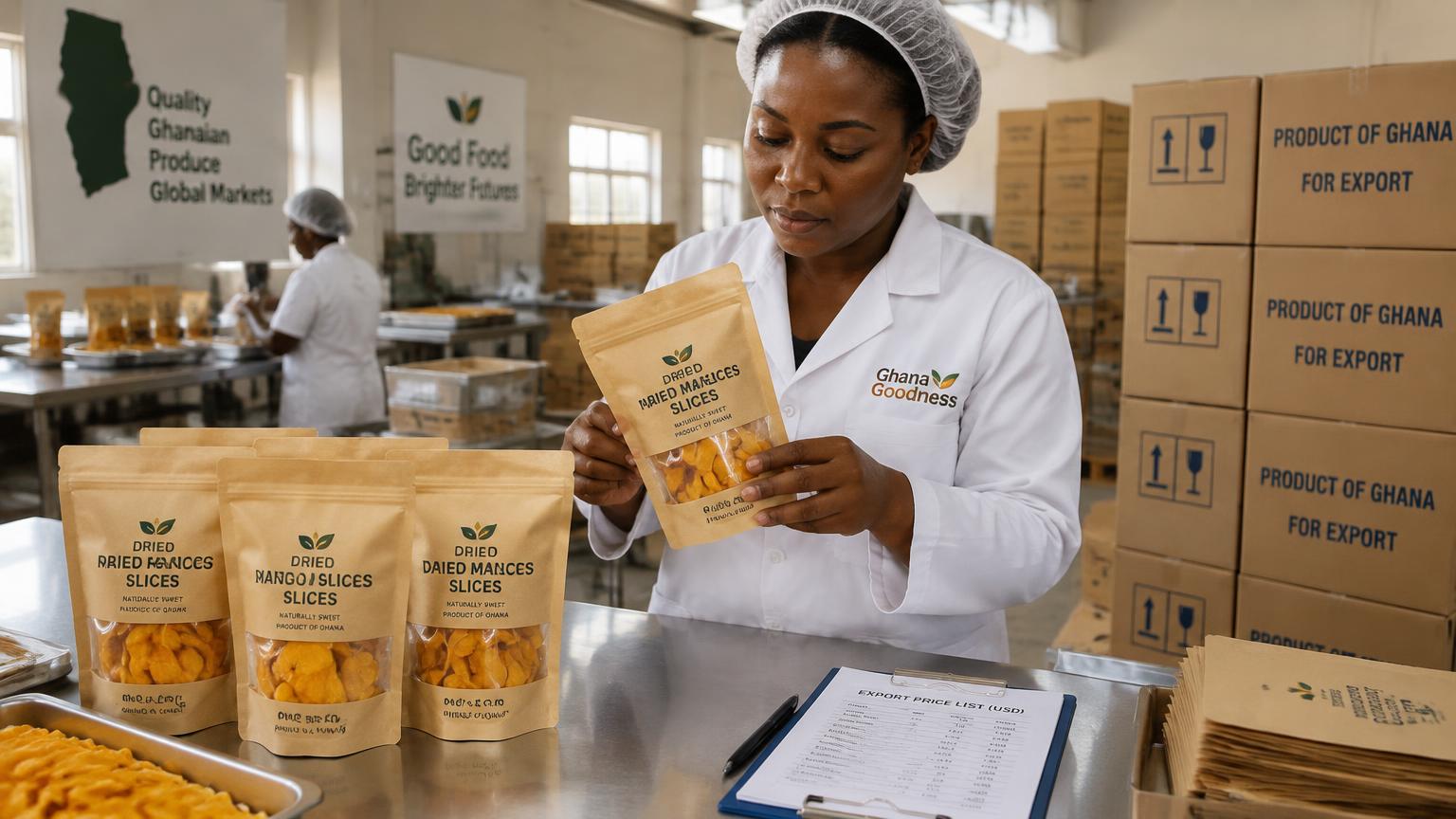
Why export pricing is different
Your local price does not work abroad. An export price must also carry stronger packaging, certificates, transport to the port, freight, insurance, bank fees, currency risk and the time you wait to be paid.
Buyers also compare you with suppliers from other countries on the same delivery term. A price only means something when it says where the goods are handed over, for example "US$5.69 per kg FOB Tema".
Four ways to look at your price
Cost-plus (your floor)
Add every cost to the delivery point, then your margin. This tells you the lowest price you can accept without losing money.
Backward from the shelf
Start from the price shoppers pay abroad, remove VAT, retailer and importer margins and duties. What is left is the most a buyer can pay you.
Competitor benchmark
Compare quotes from other origins on the same Incoterm, grade and volume.
Value premium
Certifications, traceability, steady quality and reliable delivery let you charge above the benchmark. Prove each claim with documents.
Use them together: cost-plus gives your floor, backward pricing gives the ceiling, and your quote sits between the two.
The 8-step pricing method
- 1Work out your true production cost per unit, including waste and yield loss.
- 2Add export preparation: stronger packaging, labels, certificates, inspection.
- 3Add costs up to the agreed Incoterm point (EXW, FOB, CIF and so on).
- 4Add finance costs: bank fees, letters of credit, credit insurance, payment delay.
- 5Add a currency buffer of 2 to 5% if you pay costs in local currency.
- 6Add your profit margin. This gives your target price.
- 7Check it against the market from the buyer's side (backward pricing).
- 8Decide your opening quote and your walk-away floor before negotiating.
Pricing 10 tonnes of organic dried mango, Ghana to Germany
Illustrative example based on a typical small processor. The companies and figures are examples to show the method; check current rates with your own suppliers, forwarder and bank.
Step 1. Production cost per finished kg
| Fresh mango (12 kg fresh per 1 kg dried, at US$0.18/kg) | $2.16 |
| Processing: labour, drying, energy | $1.05 |
| Packaging: food-grade pouches, nitrogen flush, export cartons | $0.62 |
| Certification and lab testing, shared across the year | $0.20 |
| Factory overheads and administration | $0.27 |
| Cost at factory gate (EXW cost) | $4.30 |
Key insight: 12 kg of fresh fruit makes 1 kg of dried mango. Pricing on fresh weight would hide more than half the real cost.
Step 2. Getting it on board at Tema
| Inland haulage Kumasi to Tema (US$1,100 per container) | $0.11 |
| Port handling, customs broker, phytosanitary and EUR.1 (US$1,400) | $0.14 |
| Bank charges and payment costs | $0.05 |
| Total cost to FOB Tema | $4.60 |
Step 3. Buffer, margin and the price ladder
Container value at CIF: $60,254. Gross profit: $9,476.
Step 4. Check from the German shelf backwards
- CIF cost per 100 g pouch: $0.60
- Plus import handling (0% duty under the EU-Ghana agreement with EUR.1): $0.63
- Importer sells at +30%: $0.82
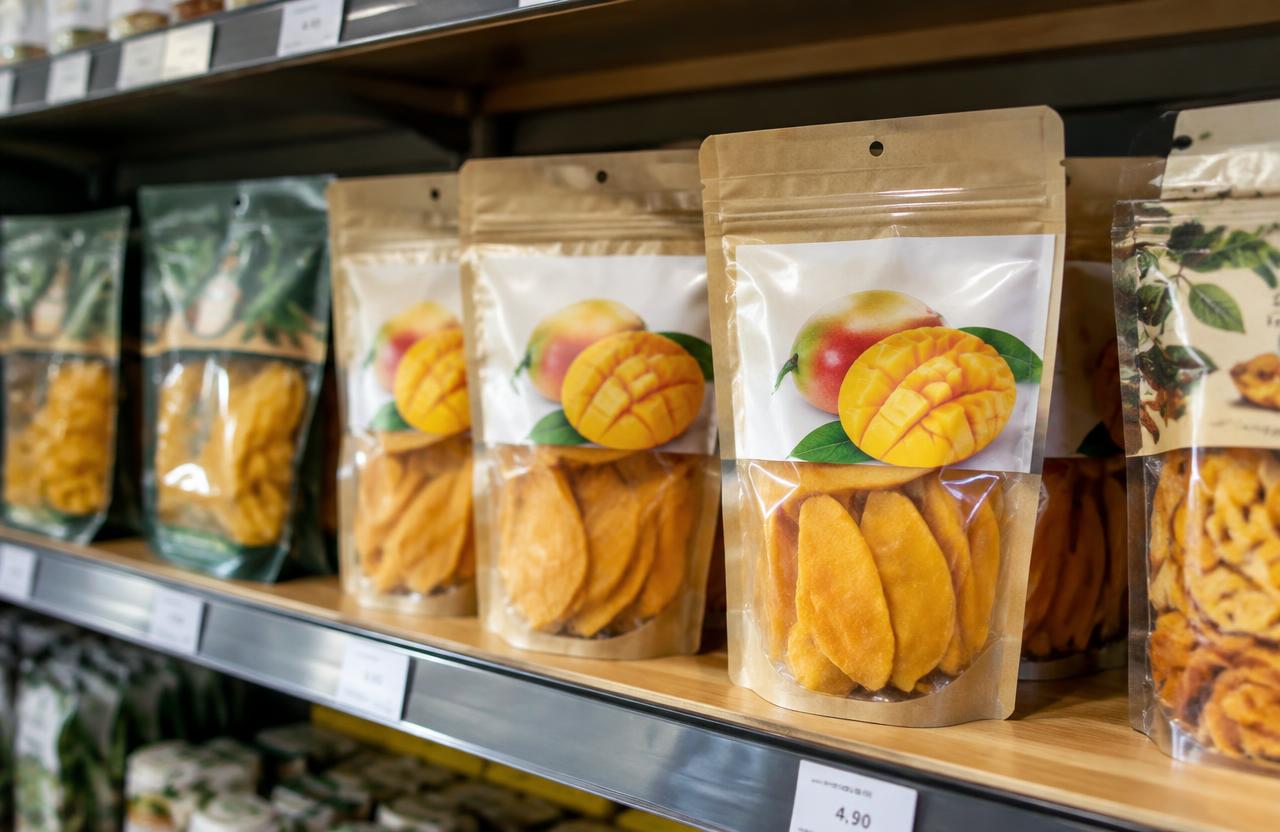
- Retailer keeps 40%: shelf price before VAT: $1.37
- Comparable organic pouches on shelf: about $2.40
Result: the shelf price lands below competitors, so there is room to raise the quote slightly or hold it to win the first order.
What the exporter decided
- Opening quote: US$6.30/kg CIF Hamburg, valid 21 days.
- Floor (zero profit) and target price set before talks. ($5.08 / $6.03 CIF)
- Discount offered for a 3-container annual contract instead of a lower base price.
- Payment: 30% deposit, 70% against copy of the bill of lading.
Case study 2: Cashew kernels from Côte d'Ivoire to South Africa under AfCFTA
A processor in Bouaké sells W320 cashew kernels to a snack packer in Durban. The question: how much does an AfCFTA duty preference change what the buyer can pay?
Illustrative example based on a typical small processor. The companies and figures are examples to show the method; check current rates with your own suppliers, forwarder and bank.
| Raw cashew nuts (about 4.5 kg per kg of kernel, at US$1.20/kg) | $5.40 |
| Shelling, peeling, grading, labour and energy | $0.85 |
| Vacuum bags and export cartons | $0.25 |
| Quality testing and food safety | $0.08 |
| Factory overheads | $0.22 |
| Haulage Bouaké to Abidjan (US$900) | $0.06 |
| Port, customs, AfCFTA certificate of origin (US$1,500) | $0.10 |
| Letter of credit and bank fees | $0.06 |
| Total cost to FOB Abidjan | $7.02 |
Why the AfCFTA certificate matters to your price
Duty rates here are an example. Check the actual rate for your tariff line in the importing country's AfCFTA schedule and make sure the goods meet the rules of origin.
- Kernel outturn (how much kernel you get from raw nuts) drives cost more than anything else. Test every lot.
- Raw nut prices move with the season. Quote short validity and buy raw material against confirmed orders.
- Use the duty saving as a selling point: the buyer saves money, so you can hold a fair price instead of discounting.
Try it: your export price ladder
Enter costs per unit (per kg, carton or piece). Results update as you type.
Insurance estimated at 0.3% of 110% of CFR value. Ask your insurer for the real rate.
Your saved prices (on this device)
Nothing saved yet.
Seven pricing mistakes that cost exporters money
Pricing on raw weight
Dried, roasted or processed goods lose weight. Cost per finished kilo, not per raw kilo.
Forgetting port storage and demurrage
Add a small contingency for delays; a few extra days at port can wipe out a margin.
Quoting CIF with an FOB price
Always confirm the Incoterm and the named port before sending any number.
Ignoring payment terms
60 days credit has a cost. Price it in or ask for a deposit.
One price for every market
Duties, freight and shelf prices differ. Build a price per market and per Incoterm.
Cutting price instead of adding value
Offer volume tiers, longer contracts or faster shipping before lowering your base price.
Never reviewing prices
Review at least every quarter and when freight, raw material or exchange rates move more than 5%.
What a professional price quote must include
Quick quiz: test your pricing skills
Five questions. Earn 10 points for each correct answer.